

Last Updated on 1 year ago by Christopher Jan Benitez
Writing is an essential skill that takes much more effort to master than reading, to listen, or speaking.
Writing includes several essential aspects: grammar, punctuation, spelling, style, vocabulary, and word usage.
It doesn’t matter if you are in academic writing, creative writing, business writing, or technical writing. Chances are, you will need to write something at some point.
There are many methods for improving your writing process, regardless of your level of knowledge. To achieve the best results, make sure you efficiently combine them.
Not only will you be able to create more effective content that allows you to communicate your ideas and message. It also allows you to jumpstart your writing career, like producing content that ranks, strengthening your writing portfolio so you can get more clients, and more!
Read below for the best writing tips to help you generate more clients by producing valuable content in the written word.
1. Make Outlines and Structure Your Writing
Want to know the secret to clear, organized writing? It starts with a solid outline.
Think of your outline as a road map. It guides you from your main point to your conclusion without any confusing detours.
Here’s a simple way to create an outline: Write your main topic at the top. Then list 3-5 key points you want to cover.
For example, if you’re writing about healthy eating habits, your outline might include: basic nutrition facts, meal planning tips, and smart shopping strategies.
Break down each key point into smaller chunks. This makes your content easier to write and read.
Remember to put your strongest points first and last. Readers often remember these sections best.
Add supporting details under each section. But keep it simple – you can always add more later.
2. Anticipate Readers’ Questions
Whether you’re writing blogs, articles, or essays in English language as your second language, understanding your readers is essential.
Practice makes perfect when it comes to improve your writing. Start by asking yourself what questions your readers might have about various aspects of your topic.
Make a list of common questions students and readers ask. For tips on writing courses, they often want to know: “Which writing workshops should I take?” or “How can I get constructive criticism?”
This approach helps develop comprehensive content that serves your writing goals. Whether you’re taking a course to learn new words or working on spelling mistakes, understanding your readers’ needs is crucial.
3. Don’t Over-explain
Even the best writers know when to stop writing. Good writing isn’t about using every word in your rich vocabulary – it’s about clarity.
Want to improve your writing skills? Focus on being concise. Many writers make the mistake of explaining the same idea multiple times, thinking it helps their readers learn better.
Here’s a practical tip: Write your first draft freely, then edit ruthlessly. Look for sentences where you’re repeating the same meaning in different words.
For example, in technical writing or when writing essays, state your point once clearly instead of explaining it three different ways. This practice helps develop stronger English writing skills.
The key principles of effective writing include knowing when enough is enough. Whether you’re working on articles, blogs, or stories, trust your readers’ ability to understand.
4. Improve the vocabulary
The first step to improving your English writing skills is getting serious about your vocabulary. The more words you know, the easier it will be for you to express yourself in writing.
You can enrich your vocabulary by reading books and articles in English, using a dictionary-like Thesaurus, WordReference, or Wiktionary, and even listening to your favorite songs.
The important note here will be to learn words within the context and not separately. This will help you see their usage and understand their multiple meanings.

5. Focus on grammar
A great way to improve writing skills on the go is by downloading a grammar app onto your phone or computer. This will help you stay up-to-date on correctly using words and phrases and expand your vocabulary.
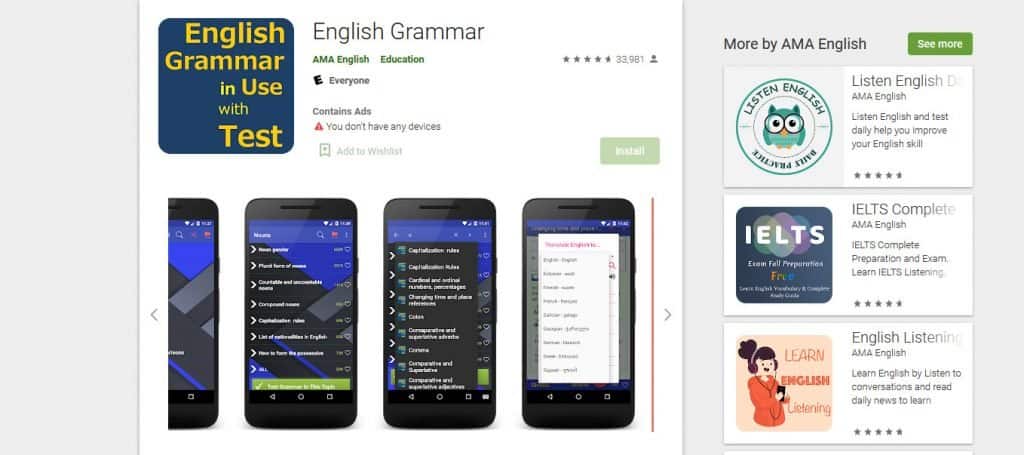
Many different apps offer this service, such as English Grammar, a digital version of Ryan Murphy’s grammar book. Another popular choice is LearnEnglish Grammar which provides theory and practice for any language level, from beginners to advanced.
Both apps are free to use and are available for Android and iOS.
6. Study Different Style Guides
There are different writing style guides that you can follow to improve your grammar knowledge.
A comprehensive guide, such as The Chicago Manual of Style, is a great way to learn about the rules for punctuation, capitalization, and more.
However, it’s important to remember that there is no “right” or “wrong” answer to following a particular style guide – it all depends on the publisher’s preference.
If you want to be an independent writer, then choosing one guide and sticking with it will make your life easier in terms of consistency.
7. Read books and articles in English
Another way to improve your vocabulary and grammar (and thus, writing) is through reading great English pieces written in novels, short stories, poems, etc.
If you are unsure where to start when finding new material that will improve your language knowledge, look at some listicles featuring the books every aspiring writer should read.
Reading fiction has improved creative thinking, which helps with writing. It also helps you develop your style of writing.
8. Dissect Writing You Admire
Take your favorite articles or short story pieces and break them down. Look at various aspects: sentence length, grammar usage, and how writers structure sentences to maintain flow.
Here’s how to practice this effectively:
- Pick a piece of good writing in your target style (creative writing, non-fiction, or technical writing)
- Analyze how the writer transitions between ideas
- Notice how they use phrases and new words
- Study their grammar and spelling choices
- Pay attention to how they edit unnecessary words
This strategy helps whether English is your second language or you’re taking writing courses to improve your skills. The best writers are often the best readers.
9. Write more often
This may seem an obvious prompt, but it is the most effective one.
They say you should keep swimming to be great at swimming. The same thing applies to great writers. The more you write, the better you will get at it.
It doesn’t matter what you write – just get started.
You can keep a journal, or blog, or write down your thoughts. Even if you are unsure what to write about, it’s okay.
Just make an effort to put pen to paper (or fingers to keyboard) as much as possible, and don’t worry too much about the quality of your work at first.
Don’t be afraid to make mistakes; keep practicing. This means simply writing without stopping or editing what comes out of your head about anything that pops into it.
Over time, you’ll get more comfortable with the practice of writing until it becomes second nature to you.
By then, you’ll have developed your own voice and tone distinct from the rest. This allows you to generate more clients or attract your target audience more effectively.
10. Create a Writing Schedule

Here’s how to improve English writing through scheduled practice:
First, pick specific times for writing and treat them as non-negotiable appointments in your calendar.
Set realistic daily word goals that challenge you without feeling overwhelming – even 300 words a day adds up to a substantial body of work over time.
Choose quiet hours when you’re most alert and can focus without interruption, whether that’s early morning or late at night.
Track your progress regularly using a simple spreadsheet or journal to stay motivated and see your improvement over time.
Most importantly, stick to your schedule like any other important appointment – consistency is key to developing strong writing habits.
For example, if you’re taking writing courses or working on creative writing projects, try these practical schedules:
- Morning: 30 minutes before work
- Lunch break: 20-minute writing sprint
- Evening: One hour of focused practice
Focus on making your schedule sustainable. Better to write 20 minutes every day than three hours once a month.
Experienced writers know that progress comes from regular practice. Use your schedule to develop good habits and improve your English writing skills step by step.
11. Practice writing different types of texts
Don’t just stick to essays and reports – try different writing genres and experiment with blogs, articles, fiction, poetry, etc.
Creating short fictional pieces will work wonders for your imagination and writing skills.
You can practice in various ways; for example: write a story about how you would survive an apocalypse or create different characters that include dialogue to see if they sound realistic.
If you’re unsure where to start writing fiction, try reading authors like Edgar Allan Poe and Jules Verne or read books written in the genres of fantasy or mystery.
12. Use writing prompts
If you are struggling with ideas, try using writing prompts.
A writing prompt is a sentence or topic that will help you find inspiration and flow your creative juices.
They provide helpful guidelines, which will help you write about anything from why someone should recycle more often to what you would do if you found a million dollars on the street.
Prompts can also help you become a good writer because they give you a topic to explore in-depth.
13. Try Transcribing Yourself
Recording yourself speaking and then writing it down helps you develop a natural flow in your language use. If we talk, we often express ideas more clearly than when we write them.
Start with simple topics you know well. Record yourself explaining an idea or telling a short story. Then, transcribe every word, including mistakes and phrases you use.
This exercise reveals several key elements:
- How you naturally structure sentences
- Common grammar errors in your speech
- Unnecessary words you tend to use
- Your authentic writing voice
Even experienced writers benefit from this strategy. It helps bridge the gap between speaking and writing skills.
This practice also gives you constructive criticism of your own work, helping you progress as a better writer in both English language and your specific writing goals.
14. Edit Ruthlessly

Good writing comes from ruthless editing. Take your first draft and look for unnecessary words that don’t add meaning to your sentences.
Here’s a practical approach to improve your writing skills:
- Remove redundant phrases
- Cut adjectives that don’t change the meaning
- Delete sentences that repeat ideas
- Combine related points to structure sentences better
Even the best writers practice this skill. Whether you’re working on creative writing or technical writing, strong editing makes your work clearer.
For example, instead of writing “The meeting that happened on Monday,” write “Monday’s meeting.” Small cuts add up to make your language more effective.
15. Accept That First Drafts Aren’t Perfect
Experienced writers know this truth: The first version is just about getting ideas down. Don’t let grammar errors or poor sentence structure stop your flow.
Think of your first draft like a sketch:
- Focus on capturing main ideas
- Don’t worry about perfect grammar
- Let your rich vocabulary flow naturally
- Keep writing without self-editing
Writing courses and writing workshops often emphasize this key principle. Your first draft is about progress, not perfection.
Even when writing essays, articles, or short story pieces, give yourself permission to write poorly at first. Good writing emerges during revision.
Remember: The goal of a first draft is to develop your basic ideas. You’ll have plenty of time to improve your writing skills during editing.
Practice makes perfect, but only if you actually finish that imperfect first draft. Focus on getting your thoughts down, then use constructive criticism and feedback to shape it into something better.
16. Eliminate Unnecessary Words and Filler Phrases
Look for words that don’t add meaning to your sentences. Even the best writers need to trim their first drafts.
Practice this essential skill by hunting for common fillers:
- “In order to” becomes “to”
- “Due to the fact that” becomes “because”
- “At this point in time” becomes “now”
- “Make a decision” becomes “decide”
Good writing is clear writing. Whether you’re working on technical writing or creative writing, eliminating unnecessary words helps your readers understand your meaning faster.
For example, instead of “The reason why is because,” just write “because.” These small changes help develop stronger English writing skills.
17. Keep Sentences Simple and Direct
Simple sentences work best. Short, direct statements help readers understand your message even when explaining complex ideas.
Practice makes perfect when learning how to structure sentences. Start with this basic pattern:
- Subject
- Strong verb
- Clear object
- No extra fluff
For example, in technical writing, instead of “The implementation of the new system was carried out by the team,” write “The team implemented the new system.”
Language skills grow stronger when you practice clarity. Whether you’re writing articles, essays, or stories, keeping sentences simple helps readers follow your ideas.
18. Make Writing Conversational
Think about how you’d explain your topic to a friend.
Good writing feels natural. Even in technical writing, you can structure sentences to sound more like a conversation than a lecture.
Here’s how to improve English writing with a conversational tone:
- Write like you speak (but better organized)
- Ask questions to engage readers
- Use everyday language when possible
- Share relevant examples from real life
19. Use Contractions Appropriately
Writing skills improve when you know when (and when not) to use contractions. They’re perfect for blogs and creative writing, but you might want to limit them in formal essays or technical writing.
Common contractions that help your writing flow:
- “It’s” for “it is”
- “You’re” for “you are”
- “Don’t” for “do not”
- “We’ll” for “we will”
Remember these key principles:
- Match contractions to your writing goals
- Use them consistently throughout your piece
- Avoid them in very formal documents
- Include them in conversational sections
20. Practice with online tools
Checking your own writing using online tools is a great way to learn from your mistakes.
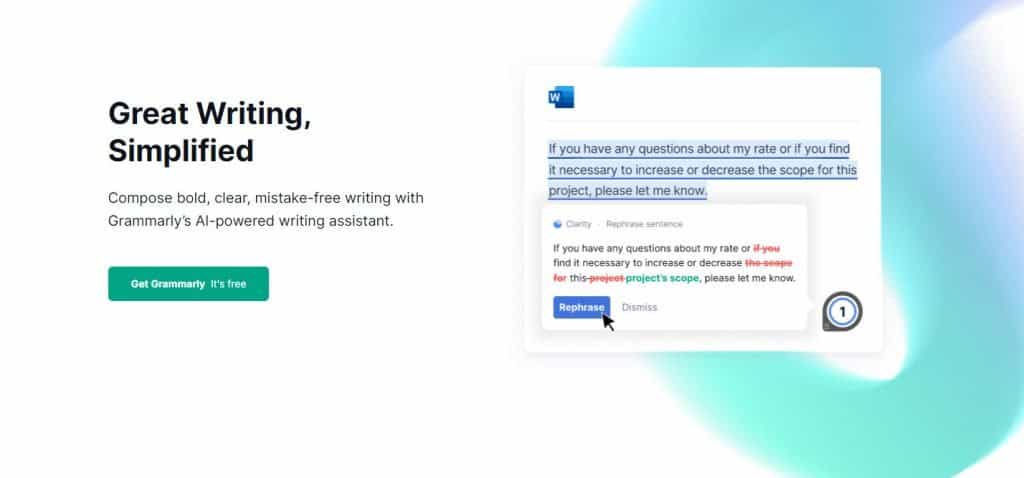
One such tool is Grammarly, a spell-checking software that helps you edit and eliminate unnecessary words in real time for writers and teams. Many other online tools like Readable and Hemingway Editor are designed to help writers achieve grammatically correct and error-free writing.
They can help you catch common mistakes in your writing, show the readability score, help with sentence structure and length by identifying filler words, and eliminate passive voice. Keep in mind, however, that Grammarly Premium comes at a price.
You can also use WordReference’s conjugation tables to help improve your verb tenses or The Free Dictionary to look up the definitions of words you don’t know. And remember – proofreading is always essential!
21. Join a community of writers
Feedback and peer editing are the best ways to evaluate your writing skills.
Participate in an online community of writers or even a writing workshop. From here, you can get feedback from other editors on your text and share your comments on others’ work. Both will help you become a better writer.
There are many social media communities that you can join, such as Facebook groups or forums where people share their stories and poems – search online to find a community that best suits you.
You will learn a lot and make new friends too! If you’re shy about sharing your work with strangers, show it to your close friend first. Take their comments on board, but ensure they’re giving constructive criticism.
22. Find a tutor
If you don’t have much time to improve your writing in the English language but still want the best possible results from a reputable source, then hiring a tutor is what you need.
Tutors can provide personalized lessons focusing on grammar and style, reading comprehension, and listening skills.
In addition, they will help you correct spelling errors, identify sentence structure mistakes and suggest changes in word choice – all of which improve overall writing quality.
An excellent way to find tutors for this type of work is by checking out platforms such as Upwork or Preply that connect teachers and students from different parts of the world.

23. Take an online course
Taking courses is another great way to get writing advice.
Many colleges now offer free lectures through MOOCs (Massive Open Online Courses) that provide opportunities to learn about different topics. These learning resources can teach you about grammar and style, as well as how to improve your writing skills overall.
You can also pick a course specializing in specific writing styles.
You can choose a pre-recorded course or join real-time webinars.
It will also be a good idea to record the classes so you can rewatch them whenever possible. You can use software like Movavi Screen Recorder. Still, you must remember that you can’t commercially use these recorded videos and upload them online, even with attribution.

24. Do Thorough Research
Good writing comes from understanding your topic deeply. Even the best writers spend significant time gathering facts before they start writing.
Here’s how to improve English writing through better research:
- Read multiple sources on your topic
- Take clear notes with citations
- Check facts from reliable websites
- Study different viewpoints
- Verify statistics and data
Practice makes perfect when developing research skills. Whether you’re writing articles, essays, or technical writing pieces, strong research helps you write with confidence.
Remember: Effective writing needs accurate information. When you understand your subject well, your language naturally becomes more precise and authoritative.
25. Don’t Be Afraid to Express Your Views
Here’s a truth about good writing: Your unique perspective matters.
Even when writing in English as a second language, your personal views add value to your work. Experienced writers know that authentic opinions make their writing stand out.
Try these strategies to express your views clearly:
- Support opinions with facts
- Share personal experiences
- Explain your reasoning
- Address opposing viewpoints
- Use your own voice
Pro tip: Good writing comes from combining knowledge with personal insight. Don’t let fear of mistakes hold you back from sharing your valuable perspective.
Focus on balancing confidence with respect for other perspectives. Whether you’re working on blogs, articles, or essays, your unique insights can make your writing more engaging.
26. Learn the differences between written and spoken language
When you write, it is essential to remember that other people will read your text. You need to use standard grammar and avoid slang or informal language.
However, when you speak, you can use the everyday language since the person listening will understand the context.
It’s a good idea to learn the differences between written and spoken English so that your writing sounds natural.
Final Say
So there you have it — 14 practical ways to achieve good writing skills and habits!
Setting goals, participating in online communities, taking courses, and practicing writing – are all great methods to improve at expressing your thoughts on paper or a Word document.
These tips will help you improve grammar and vocabulary specific to certain industries like technology, marketing, or medicine.
Remember to practice regularly and have fun with it, too – after all, writing should be enjoyable.d be enjoyable.
